Driving in the UK for the first time? Whether you’re visiting from abroad or picking up a hire vehicle, the rules of UK roads can catch you out. Speed limits vary by road type. And London has many charges that drivers don’t know about.
This guide clearly covers the essential UK driving rules you need to know.
• What Side Of The Road Do You Drive On In The UK?
• What Are The Speed Limits For Driving In The UK?
• What Is The Drink-Drive Limit In The UK?
• UK Road Charges You Should Be Aware Of
• UK Parking Rules and Paint Markings to be Aware of
• What Are The Rules On Using A Mobile Phone While Driving In The UK?
What Side Of The Road Do You Drive On In The UK?
The UK drives on the left. This is one of the most important things to get right. Roundabouts are also navigated clockwise. Give way to traffic already on the roundabout from your right.
If you are arriving from a country that drives on the right, such as the US, Canada or mainland Europe), this will be your biggest adjustment. Because we drive on the left, the driver’s seat in a UK car is on the right-hand side.
If you’re driving in the UK but are from a country that drives on the right, allow extra time to adjust before motorway driving. Junctions, roundabouts and lane changes all feel different. Take it steady until it’s second nature.
What Are The Speed Limits For Driving In The UK?
UK road rules set different speed limits depending on road type and vehicle class.
For standard cars and motorcycles:
- Built-up areas (urban roads): 30mph (or 20mph where signed)
- Single carriageways: 60mph
- Dual carriageways and motorways: 70mph
Important regional difference: In Wales, the default limit on restricted roads is 20mph, not 30mph. (gov.wales, 2021)
For Larger Vehicles
Vans and larger vehicles have lower speed limits in the UK. Most mid-size and large vans are limited to 50mph on single carriageways and 60mph on dual carriageways. If you’re hiring a van from Fairview and are unsure, ask us and we can tell you exactly what vehicle class and limits you must adhere to.
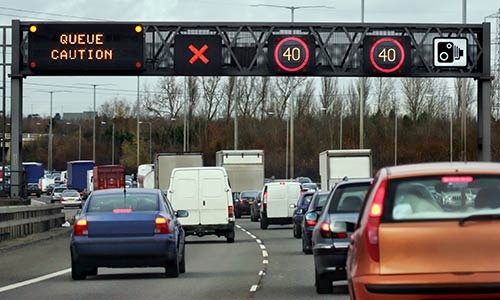
Smart motorways display variable speed limits on overhead gantries. These change in real time. Though these are legally enforceable, according to the Department for Transport (2024), 44% of cars exceed the speed limit on motorways. Make sure to keep an eye out for these changes so you don’t end up one of the 1,000 caught speeding in Britain every day. (Motoring Research, 2026)
What Is The Drink-Drive Limit In The UK?
There is no safe number of drinks. The safest approach is none. UK driving rules on alcohol do vary by nation, but across the board the penalties are severe. Penalties include a minimum 12-month driving ban, an unlimited fine and up to 6 months in prison.
England, Wales and Northern Ireland:
- 80mg of alcohol per 100ml of blood
- 35mg of alcohol per 100ml of breath
Scotland:
- 50mg of alcohol per 100ml of blood
- 22mg of alcohol per 100ml of breath
UK Road Charges You Should Be Aware Of
Where Will I Need to Pay The London Congestion Charge?
You need to pay the London Congestion Charge if your route enters the charging zone during operating hours. This includes hired vehicles. It is the driver’s responsibility to pay, not the hire company’s.
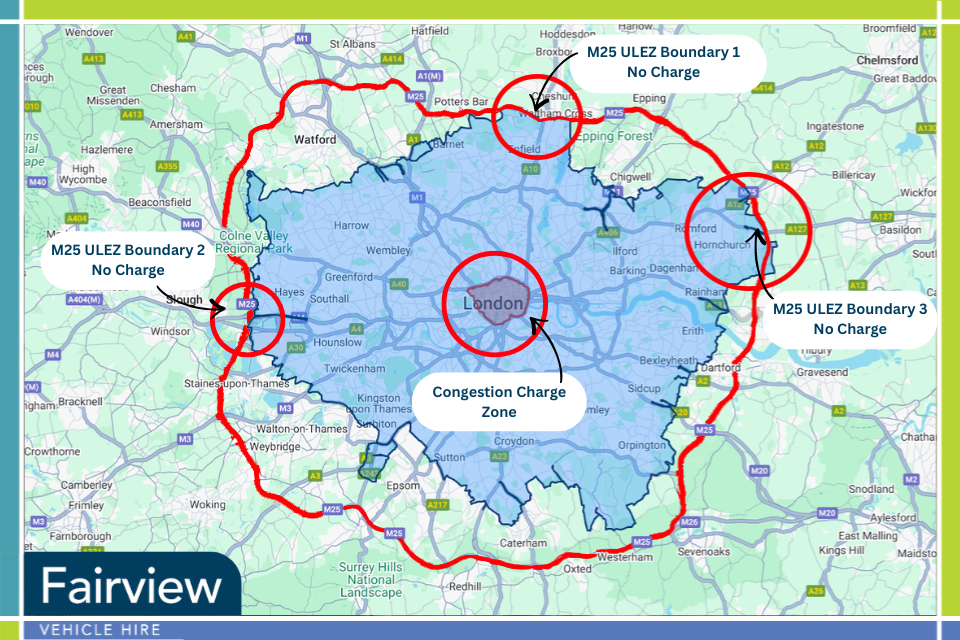
The charge currently applies in central London, Monday to Friday, 7 am-6 pm and weekends, 12 pm-6 pm. Charges can be paid directly via TfL’s website.
As opposed to the traditional congestion charge that simply applies when entering a traffic zone, many UK cities alternatively enforce Clean Air Zones (CAZ):
- Birmingham (class D)
- Bristol (class D)
- Bath (class C)
- Bradford (class C)
- Portsmouth (class B)
- Sheffield (class C)
- Newcastle & Gateshead (class C)
There are four classes of CAZ, if your vehicle exceeds the emissions standards in that zone, you may be required to pay a charge.
What is ULEZ?
There is also the Ultra Low Emission Zone (ULEZ), which covers a much larger area of London. Vehicles must meet specific emission standards or pay a daily charge. Many modern hire vehicles meet the standard, but always confirm before driving in the UK’s capital. Fairview’s team can advise on this at the time of booking.
Toll Road Charges
The UK does not have a nationwide motorway toll system. However, several specific roads, bridges and tunnels do charge fees. The M25 Dartford crossing and the M6 Toll are the busiest toll crossings in the country, serving as vital commuter, regional and cross-estuary routes.
Missing a payment is costly. Most systems issue penalty charges for non-payment (typically £70, reduced to £35 if paid within 14 days).
All UK toll payments are cashless or card-only at most points. Plan ahead and pay online where required.
UK Parking Rules and Paint Markings to be Aware of
Parking rules in the UK are strictly enforced by local councils and traffic wardens. You need to be able to understand the meaning of the paint lines on the edge of the road to avoid getting ticketed.

- Double Yellow Lines: Strictly no parking at any time. You may stop momentarily to drop off or pick up passengers, but the vehicle cannot be left unattended.

- Single Yellow Lines: Restricted parking during specific times. Look for nearby small yellow signs detailing the exact hours (“Mon-Sat 8am-6pm”). Outside of these hours, you are generally free to park, provided it is safe and doesn’t cause an obstruction.
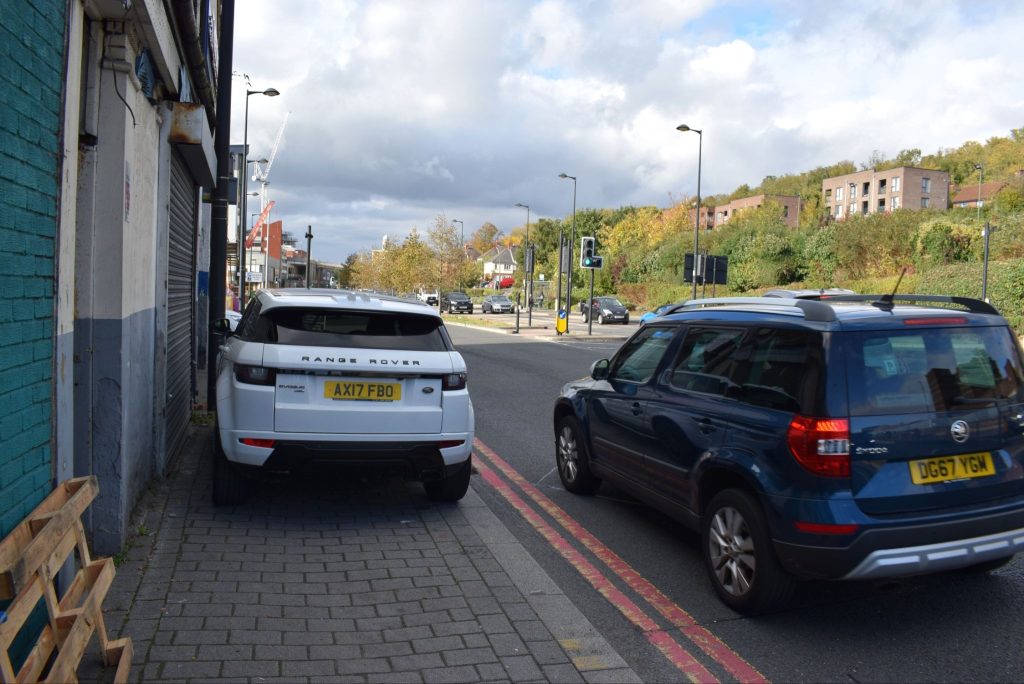
- Red Lines (Red Routes): You’ll commonly see red lines in London, Edinburgh and sometimes city centres. These mean absolutely no stopping, parking or loading at any time on double red lines. Stopping illegally on a red route will likely result in a Penalty Charge Notice (PCN) issued via CCTV or patrolling enforcement officers.
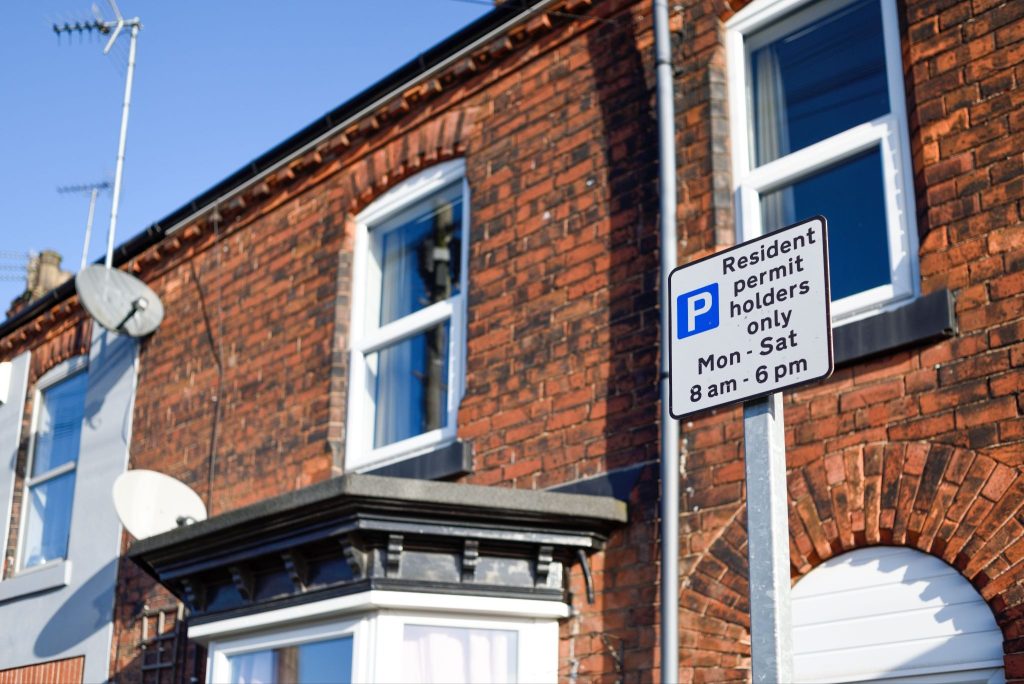
- Resident Permit Holder Only Parking: Marked by white dashed lines along the roadside, these parking spaces are reserved for local residents who have purchased a valid neighborhood parking permit from the local council. Always check the accompanying white parking sign on the pavement. If it says “Permit holders only” alongside specific times, the restriction applies only during those hours.
What Are The Rules On Using A Mobile Phone While Driving In The UK?
It is illegal to use a handheld mobile phone while driving in the UK. This includes when stationary in traffic.
Penalties: 6 points on your licence and a £200 fine. New drivers who passed within the last two years face an automatic disqualification.
Hands-free use is permitted, but the police can still charge you if they judge your driving to be impaired. Sat-nav devices must be mounted securely and set before you set off. Touching a mounted phone to adjust a route while driving still counts as an offence if it causes distraction.
What Are The Seatbelt Laws In The UK?
When in the UK, if you’re in a moving vehicle you must wear a seatbelt where one is fitted. The driver is responsible for ensuring passengers under 14 years old are properly restrained.
Failure to wear a seatbelt in the UK carries a £100 fine.
Appropriate Child Car Seat
UK law requires children to use a child car seat until they are 12 years old or 135cm tall, whichever comes first. After that, a standard seatbelt must be worn. The driver is responsible for compliance.
Seat requirements by stage:
- Birth to 15 months: Height-based seats must be rear-facing until your child is over 15 months old. This is the legal minimum. Safety experts recommend rear-facing for longer, ideally up to age four.
- 15 months onwards: A forward-facing seat with a five-point harness can be used once the child has outgrown their rear-facing seat.
- Older children (booster stage): Children weighing more than 22kg or taller than 125cm can use a backless booster seat.
Never fit a rear-facing child seat in the front of a vehicle if there is an active airbag on the passenger side. If the airbag deploys, it could cause serious or even fatal injury.
What Driving Licence Do I Need To Drive In The UK?
UK road rules on licences depend on where you’re from:
- UK and EU licences: Valid for driving in the UK
- Non-EU international licences: Valid for up to 12 months from your date of entry
- International Driving Permit (IDP): May be required alongside some non-EU licences. If your licence is not printed fully in English, you’ll need an IDP.
If you’re unsure whether your licence qualifies, read our full guide on international driving permits.
Are There Any Other UK Road Rules Worth Knowing?
A few important UK road rules that frequently catch drivers out:
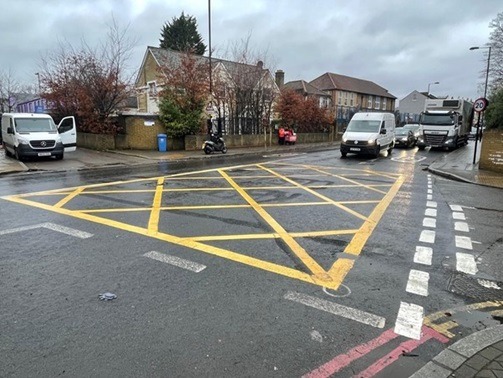
- Box junctions: Do not enter unless your exit is clear. Yellow box markings are strictly enforced in London.
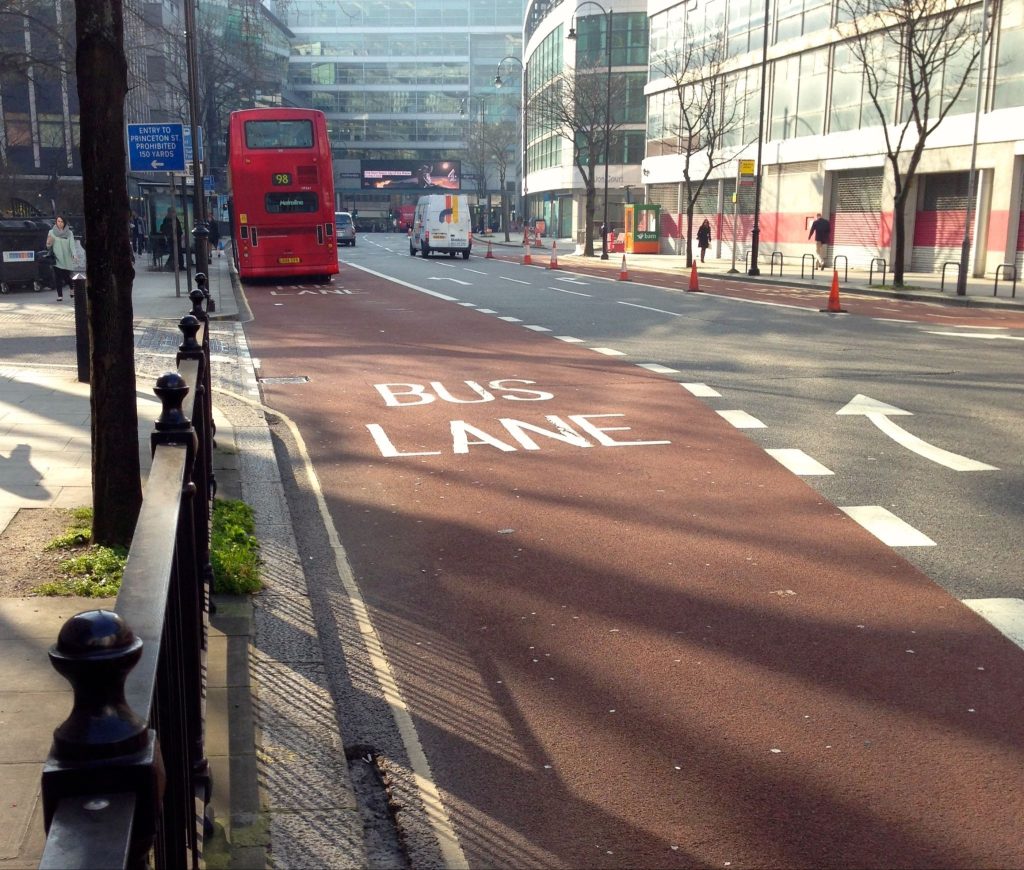
- Bus lanes: Check the operating hours on the sign. Driving in an active bus lane carries a penalty charge.
- Motorway hard shoulder: On a standard motorway, the hard shoulder is for emergencies only. On smart motorways, it may be an active lane. Look for the red ‘X’ signs to confirm lane status.
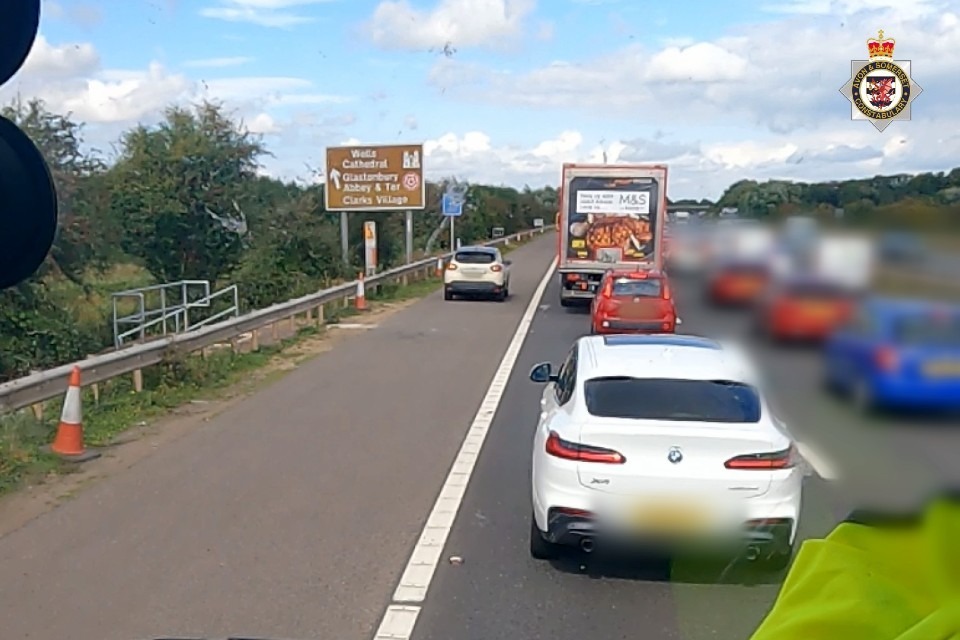
- Headlights: Use them in poor visibility and at night. Fog lights should only be used when visibility drops below 100 metres.
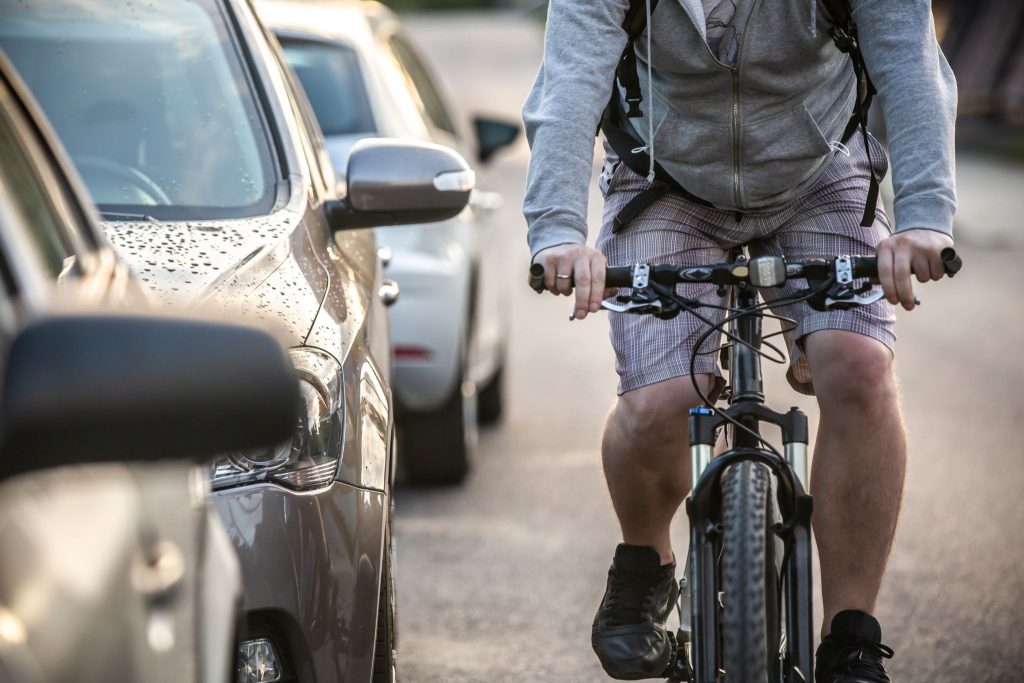
- Under Highway Code Rule 163, drivers must leave at least 1.5 metres of space when overtaking cyclists at speeds of up to 30mph. At higher speeds, motorists are expected to leave even more room
UK Motorway Driving Rules
Motorways are the fastest roads in the UK and carry some of the most serious penalties for rule-breaking. Here’s what every driver needs to know.
Lane discipline: Always drive in the left-hand lane when the road ahead is clear. The middle and right lanes are for overtaking only. Return to the left lane as soon as you’ve passed. Middle-lane hogging is a fixed penalty offence – £100 fine and 3 penalty points.
Speed limit: The national motorway speed limit is 70mph for cars. Variable speed limits displayed on overhead gantries are legally enforceable, not advisory.
Safe following distance: The Highway Code recommends at least a two-second gap between you and the vehicle in front. Double this on wet roads. Increase further in snow or ice.
Joining and leaving: Join via the slip road and match your speed to traffic before merging. Signal left in good time when approaching your exit. Be aware that 50mph can feel like 30mph after motorway driving. Always check your speedometer on the slip road.
Smart motorways: On smart motorways, the hard shoulder may be used as a live lane. A red ‘X’ above any lane means it is closed (driving in it is illegal and carries a fine). If you break down and there is no hard shoulder, get to an emergency refuge area (marked with an orange SOS sign) if it is safe to do so.
Stopping: You must not stop on a motorway carriageway, slip road, hard shoulder or central reservation unless it is an emergency. If you break down, switch on hazard lights immediately.
Prohibited vehicles: Certain vehicles cannot use motorways at all, including cyclists, motorcycles under 50cc, pedestrians and agricultural vehicles.
UK Countryside Driving Rules
Rural and cross-country driving in the UK comes with its own set of rules and hazards. Many drivers are underprepared for it.
Speed limits on country roads: The default national speed limit on single carriageway rural roads is 60mph. That does not mean 60mph is always safe. Blind bends, narrow lanes and unexpected hazards mean you should drive at a speed you can stop within the distance you can see to be clear.
Single-track roads: These are roads wide enough for only one vehicle. They are common in rural Scotland, Wales and parts of northern England. The rules under Highway Code Rule 155 are clear:
- If a vehicle is coming towards you, pull into a passing place on your left, or wait opposite one on your right.
- Give way to vehicles travelling uphill whenever possible.
- If necessary, reverse to the nearest passing place to allow the other vehicle through.
- Never park in or block a passing place.
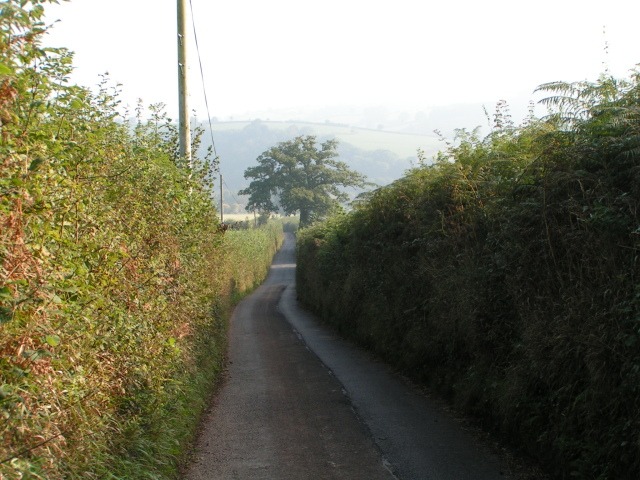
Vulnerable road users: Country roads are shared with cyclists, horse riders, pedestrians and livestock. The Highway Code requires you to pass horses at under 10mph and give them at least two metres of space. Do not sound your horn near horses. It can cause them to bolt. Slow down well in advance and pass wide.
Solid white lines: These appear on bends with poor visibility. Do not cross or straddle a solid white centre line to overtake. It is illegal.

Watch for the unexpected: Mud on the road, slow farm vehicles and animals crossing are all common on rural routes, especially in autumn and winter. Reduce speed accordingly.
MOT and Roadworthiness
Every vehicle over three years old in the UK must undergo an annual MOT (Ministry of Transport) test to certify that it meets strict environmental and road safety standards.
If you are hiring a vehicle from a reputable vehicle hire company, such as Fairview, the vehicle will automatically be fully covered, roadworthy and MOT-compliant. However, the driver remains legally responsible for daily roadworthiness during the hire period. Ensure that all headlight bulbs function, windshield wipers work efficiently.
Ready To Get On The Road?
Now you know the essential UK driving rules, the next step is finding the right vehicle.
Fairview Vehicle Hire operates across London and the South East, with branches at: Heathrow, London City Airport, Battersea, Kensington, Egham and Bray. We offer Cars, Vans, Minibuses and electric vehicles.
Hire prices start at just £18 per day.
Have a question before you book? Contact our team – we’re happy to help with anything from licence queries to vehicle recommendations. Or explore our full fleet and book online today.