From the sunny shores of the Mediterranean to the winding roads of the Alps, exploring France by car is one of the best ways to do so. But before you set off on your journey, it’s crucial to understand the rules for driving in France. If you’re bringing a UK car or planning to drive abroad in France for the first time, this article will cover everything you need to know.
From driving laws in France to the documents you must carry, being prepared ensures your journey is as smooth as the roads down to the Riviera.
IN THIS ARTICLE:
- Legal Equipment for Driving in France
- The key Road Rules for Driving in France
- Speed Limits and Measurements
- Unique French Driving Rules and Recommendations
- Emergency Services and Important Numbers
- Documents Required for Driving in France
- Driving in France With Fairview Vehicle Hire
- Driving in France FAQs
Legal Equipment for Driving in France
French law requires all drivers, including tourists, to carry certain safety items in their car at all times. Failure to comply could result in an on-the-spot fine, so it’s worth checking you have these things before you even turn the key..
- Reflective Safety Vest: You need one reflective safety vest per passenger. These are to be worn if you exit the vehicle on the roadside in case of a breakdown or emergency.
- Warning Triangle: Required in all vehicles and used in the same situation as the reflective vest. The triangle will warn other drivers that there is a hazard.
- Headlamp Beam Deflectors: Some UK vehicles need to adjust their headlights to avoid dazzling oncoming traffic.
- UK Sticker or Euro Plate: If your number plate doesn’t have a UK or EU flag, you’ll need to display a UK sticker on the rear of your vehicle.
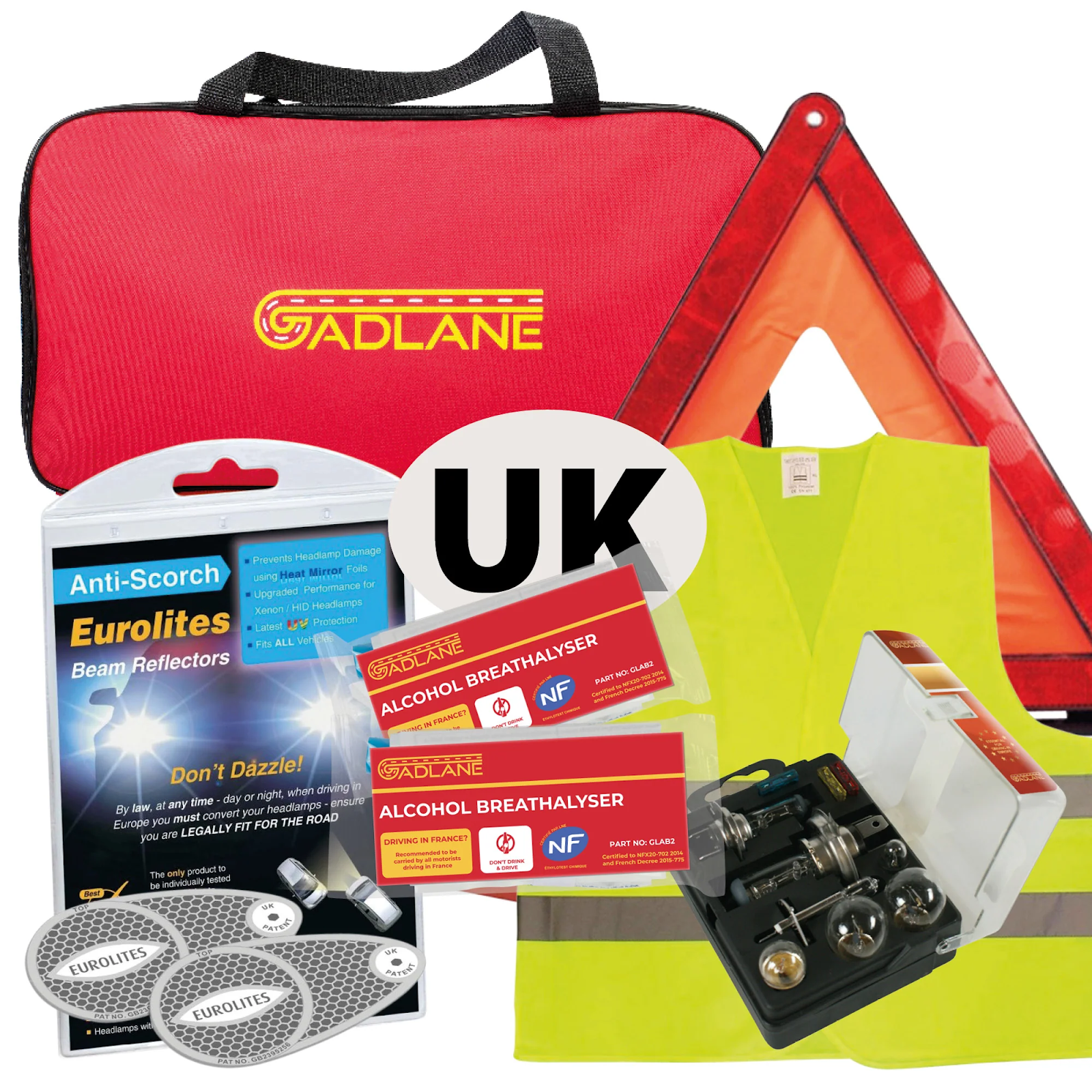
It’s simple to pick up a complete driving in France kit online or at major retailers such as Halfords.
The Key Road Rules for Driving in France
These are the core driving laws in France that every motorist must follow, whether you’re visiting for a short holiday or taking a longer road trip. Some rules may feel familiar whereas others can differ significantly from what UK drivers are used to.
- Driving on the Right Side: Unlike in the UK, motorists in France drive on the right-hand side of the road. For UK drivers, this can feel unnatural at first, so staying alert, especially at roundabouts and junctions, is crucial.
- Overtaking Rules: Overtaking occurs on the left in France and you must never cross a solid white line to pass other vehicles. Be sure to use your indicators to signal your intentions clearly.
- Roundabouts: Traffic already on the roundabout has priority in France, so always give way to traffic coming from your left before entering.
- Alcohol Limits and Penalties: The general legal blood alcohol limit in France is 50mg per 100ml of blood (0.05% BAC). However, novice drivers must stay below 20mg per 100ml. Penalties for drink-driving range from fines of €135 to €750, with possible license suspension and even imprisonment in serious cases.
- Mobile Phones: Using a handheld mobile phone while driving is illegal in France and can result in fines and penalty points.
- Traffic Lights: French traffic lights follow the standard red-amber-green system, but there is no amber light before green.
Speed Limits and Measurements

In France, all speed limits are posted in kilometres per hour (kph), not miles per hour (mph). This is very important to keep in mind if you’re used to UK signage. The national speed limit on motorways is 130 km/h (approximately 80 mph), but this drops to 110 km/h in wet weather.
Dual carriageways are generally limited to 110 km/h, while main roads outside built-up areas are set at 80 km/h. Within towns and cities, the speed limit is typically 50 km/h, unless otherwise indicated.
Heavier vehicles, such as those over 3.5 tonnes and large trucks, may also be subject to lower speed restrictions. Always pay close attention to road signs, as limits can change suddenly based on weather, location or vehicle type
If your vehicle allows you to switch the speedometer from mph to km/h, it’s a good idea to make the change. This will make it much easier to stick to the local speed limits.
Unique French Driving Rules and Recommendations
While most French road laws are similar to those in the UK, there are a few unique rules and practices that might catch you off guard. Being aware of these can help you avoid fines and confusion while driving in France.
- Breathalysers: Although not currently enforced with a fine, it’s still recommended that you carry a breathalyser in your vehicle. This remains part of the official guidance and is included in many driving in France kits.
- No Earphones or Headphones: It is illegal to drive while wearing any kind of earphones or headphones. Only fully integrated car systems are permitted.
- ‘Rappel’ on Road Signs: If you see the word “rappel” on a road sign, it means “reminder.” It’s typically used to reinforce that the current speed limit is still in effect, especially after junctions or roundabouts
Emergency Services and Important Numbers
In the event of an emergency while driving in France, here are the key numbers to know:
- 112 – The universal European emergency number, available from any phone and connects you to local emergency services.
- 15 – Medical emergencies.
- 17 – Police.
- 18 – Fire brigade.
- 196 – Sea and coastal emergencies.
Fairview Vehicle Hire recommends keeping these numbers saved in your phone or written down in your vehicle for quick access if needed.
Documents Required for Driving in France
Possibly the most important thing, make sure you have all the necessary documents with you. French authorities can request to see these at any time and not having them could result in fines or delays.
- Your Full Driving Licence – A valid UK photocard driving licence is accepted in France. You don’t need an International Driving Permit for short visits.
- Vehicle Insurance – Proof of insurance is essential. Make sure your policy covers you for driving abroad in France.
- Vehicle Registration Document (V5C) – You must carry the original V5C logbook for the vehicle you’re driving.
- Passport – A valid passport is required to enter and travel around France. Make sure its expiry date is more than 6 months away.
- Travel Insurance (Recommended) – While not compulsory, having travel insurance with breakdown and medical cover is strongly advised for peace of mind.
Driving in France With Fairview Vehicle Hire
Driving in France is one of the best ways to experience the country’s rich culture, stunning landscapes and hidden gems. Whether you’re looking for car hire for a holiday, van hire for a move or minibus hire for group travel, we’ve got you covered.
If you’re planning to take your hire vehicle abroad, we can organise the paperwork and insurance you’ll need to drive in France legally and confidently. Want to know more? Take a look at our recent article: Can I Travel in Europe When Hiring a Car from Fairview Vehicle Hire.
For any questions please don’t hesitate to contact us and to book your next hire vehicle, use our online booking system today!
Driving in France FAQs
1. Do I need a breathalyser to drive in France?
It’s recommended but not legally enforced. You’re encouraged to carry a certified breathalyser, but there’s no fine if you don’t have one.
2. What does ‘rappel’ mean on French road signs?
Rappel means reminder, it’s used to remind drivers that the current speed limit is still in effect.
3. Do I need my V5 to drive in France?
Yes, you must carry the original V5C (vehicle registration document) to prove ownership and registration of your vehicle.
4. Do I need headlamp converters in France?
Yes, UK drivers must fit headlamp beam converters to avoid dazzling oncoming traffic when driving on the right.
5. Can you turn right on red in France?
Generally, no. Turning right on a red light is not allowed unless there is a specific arrow sign and flashing amber light indicating that you can proceed with caution.